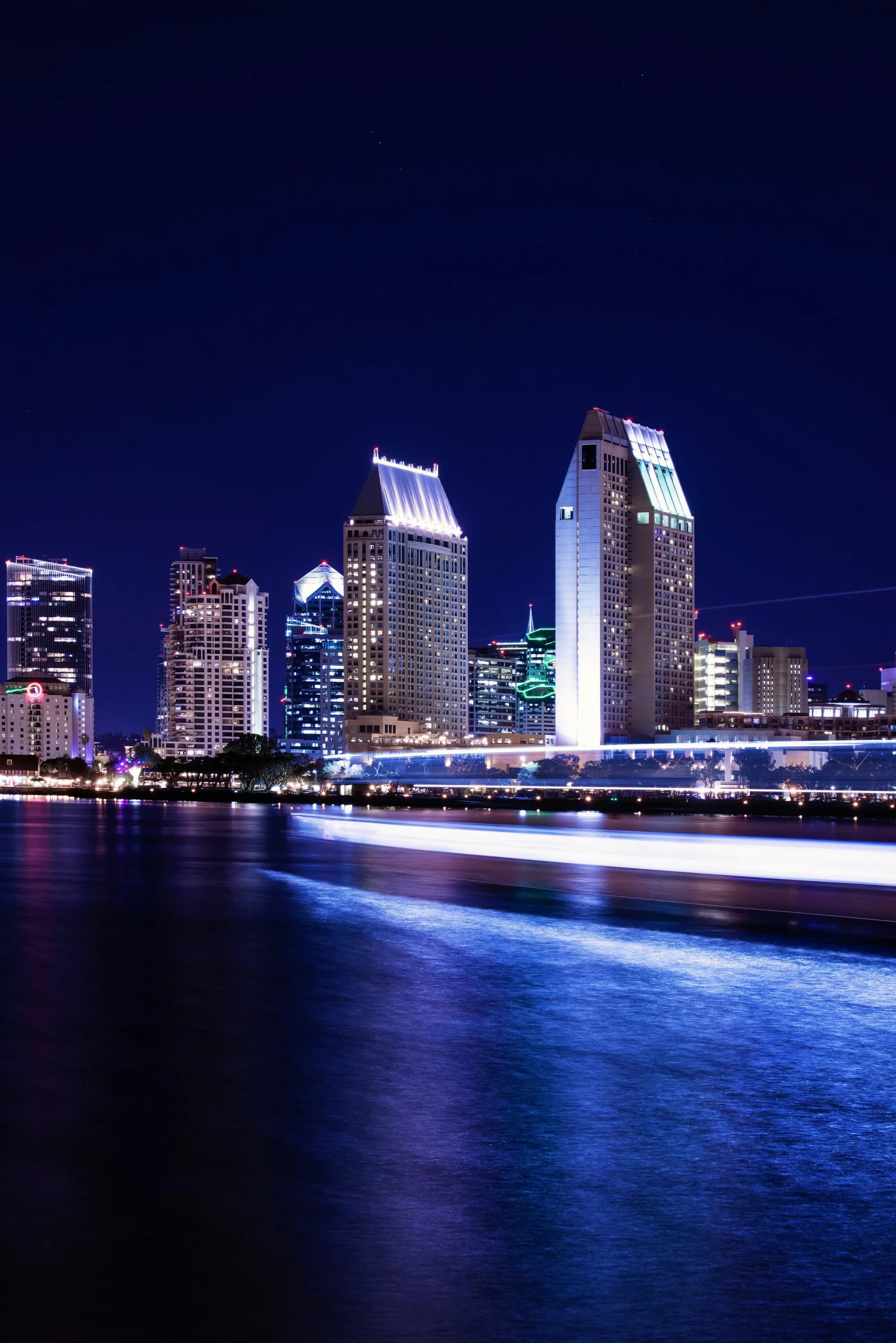
San Diego Guide: Homes, Schools & Lifestyle
A buyer's look at California's second-largest city: home prices, school districts, transit, walkability, and what to know before you buy in San Diego.
San Diego County · 7 min read
Overview
San Diego is California's second-largest city and the eighth-largest in the United States by population. As the county seat of San Diego County, it anchors a Pacific coast metropolis built around defense, biotechnology, tourism, and higher education, including UC San Diego. The city spans roughly 372 square miles, stretching from the Pacific coast east to Interstate 15, and from the US-Mexico border north to Del Mar and Poway, making it one of the largest cities in California by land area.
Within that footprint, San Diego contains more than 90 distinct neighborhoods and communities, from coastal La Jolla and Pacific Beach to inland Mira Mesa and Rancho Bernardo. The city is also home to Balboa Park, a 1,200-acre urban cultural park with 17 museums, gardens, and performance venues, including the San Diego Zoo. Buyers weighing San Diego are really choosing among dozens of distinct micro-markets, each with its own housing stock, commute pattern, and price point.
Thinking about San Diego?
Talk it through with Nataliya Fonseca — buying, selling or just weighing the move.
Things to Do
- Balboa Park — a 1,200-acre urban park with 17 museums, gardens, and the San Diego Zoo.
- San Diego Zoo — a world-renowned zoo within Balboa Park housing more than 3,500 animals.
- USS Midway Museum — a retired aircraft carrier turned museum on the Embarcadero downtown.
- Cabrillo National Monument — a National Park Service site on Point Loma marking Cabrillo's 1542 landing, with tide pools and a historic lighthouse.
- Mission Bay Park — one of the largest man-made aquatic parks in the U.S., popular for boating and beach recreation.
- Gaslamp Quarter — a historic downtown entertainment district with Victorian-era architecture.
- Petco Park — the downtown ballpark and home of the San Diego Padres.
- SeaWorld San Diego — a major marine-life theme park on Mission Bay.
- La Jolla Cove — a coastal cove and beach known for snorkeling and sea life viewing.
Dining and Shopping
- Gaslamp Quarter — historic downtown blocks with restaurants, bars, and nightlife.
- Little Italy — a restaurant-dense neighborhood with a large Saturday farmers' market.
- Westfield UTC — a major regional shopping center near University City.
- Fashion Valley — a large open-air shopping center in Mission Valley.
Schools
San Diego Unified School District is the largest district serving the city and the second-largest in California, with roughly 121 elementary schools, 24 middle schools, and 21 high schools, serving an estimated 95,000 to 112,000 students depending on the reporting year. Portions of the city, particularly far northern and eastern communities, may fall in other districts such as Poway Unified. Individual school assignments vary by neighborhood, so confirm the assigned school for any specific address before you buy. School data provided by GreatSchools.
Getting Around
San Diego's freeway network includes Interstate 5, Interstate 8, Interstate 15, Interstate 805, State Route 163, State Route 94, and State Route 52, connecting coastal, central, and inland communities. Public transit options include the San Diego Trolley (MTS), which runs Blue, Orange, Green, and Copper light rail lines, along with the broader San Diego Metropolitan Transit System (MTS) bus network. The COASTER commuter rail, operated by the North County Transit District, connects to and from downtown. San Diego International Airport (SAN) serves the city directly.
San Diego carries a Walk Score of 53, a Transit Score of 37, and a Bike Score of 43 as of 2026. Scores provided by Walk Score®.
Housing and Market
San Diego's housing stock is diverse citywide, ranging from single-family detached homes in suburban communities like Rancho Bernardo, Scripps Ranch, and Tierrasanta, to dense condo and apartment towers downtown and in Mission Valley, plus classic bungalows and craftsman homes in older urban neighborhoods like North Park and South Park. Construction era varies widely by neighborhood, from early-1900s urban cores to master-planned communities built from the 1970s through the 2020s. Lot sizes follow the same pattern: smaller urban lots downtown and in older core neighborhoods, larger suburban lots in northern and eastern communities. HOAs are common in newer planned communities and condo or townhome developments, and less common in older urban-core neighborhoods.
As of August 2026, the median sale price in San Diego was $930,000.
Homes for sale
See what’s on the market in San Diego right now.
By the Numbers
| Metric | Value |
|---|---|
| Population | 1,389,526 |
| Median age | 36.6 |
| Median household income | $111,032 |
| Owner-occupied housing | 47.3% |
| Median sale price (August 2026) | $930,000 |
| Walk Score | 53 |
| Transit Score | 37 |
| Bike Score | 43 |
Population and income figures are from ACS 2024 1-year estimates for the City of San Diego. Scores provided by Walk Score®.
Know Before You Buy
San Diego has a Mediterranean/semi-arid climate with mild, dry summers and cooler, wetter winters; the region is more arid than a typical Mediterranean zone, with relatively low annual rainfall. Wildfire risk affects a meaningful share of city buildings, particularly in canyon-adjacent and eastern communities, and the region also carries general Southern California earthquake exposure, though specific fault and liquefaction risk varies by neighborhood.
If you're considering a short-term rental, note that rentals under 30 days require a City of San Diego STRO license, with tiered fees running roughly $226 to $1,170. Whole-home rentals are capped citywide, and licenses are not issued for ADUs — accessory dwelling units generally cannot be used as short-term rentals, except in limited home-sharing cases where the owner lives on-site.
History
San Diego is the site of the first Spanish mission in Alta California, Mission San Diego de Alcalá, founded July 16, 1769 by Junípero Serra. The city was incorporated in 1850, following the U.S. acquisition of California from Mexico in 1846. Through World War I and World War II, San Diego grew into a major U.S. Navy port and shipbuilding center, cementing its identity as a military and maritime hub.
Nearby Neighborhoods
San Diego encompasses dozens of distinct communities. A sample of well-known ones includes coastal areas such as La Jolla, Pacific Beach, Mission Beach, Ocean Beach, Point Loma, and Mission Bay Park; central neighborhoods like Balboa Park, Bankers Hill, Downtown San Diego, Gaslamp Quarter, Hillcrest, Mission Hills, Mission Valley, Normal Heights, North Park, and South Park; and inland communities such as Rancho Bernardo, Rancho Peñasquitos, Scripps Ranch, Clairemont, Kearny Mesa, Mira Mesa, Sorrento Valley, University City, Linda Vista, and Tierrasanta.
Frequently Asked Questions
What is the median home price in San Diego right now?
As of August 2026, the median sale price in San Diego was $930,000.
Is San Diego a walkable city?
San Diego has a Walk Score of 53, a Transit Score of 37, and a Bike Score of 43 as of 2026, meaning walkability varies significantly by neighborhood; some urban-core areas score much higher than the citywide average. Scores provided by Walk Score®.
What school district serves San Diego?
San Diego Unified School District serves most of the city and is the second-largest district in California, with roughly 121 elementary schools, 24 middle schools, and 21 high schools. Some far northern and eastern communities fall in other districts, such as Poway Unified.
What are some well-known neighborhoods to consider in San Diego?
The city includes more than 90 distinct neighborhoods, from coastal areas like La Jolla and Pacific Beach to inland communities like Mira Mesa and Rancho Bernardo, each with its own housing stock and price point.
How far is San Diego from the airport and downtown?
San Diego International Airport (SAN) serves the city directly; specific drive times to downtown and other hubs vary by neighborhood and traffic conditions.
Can I run a short-term rental (Airbnb) in San Diego?
Short-term rentals under 30 days require a City of San Diego STRO license, with tiered fees roughly $226 to $1,170. Whole-home rentals are capped, and licenses generally are not issued for ADUs except in limited owner-occupied home-sharing cases.
What is the median household income in San Diego?
The median household income is $111,032, based on ACS 2024 1-year estimates, with a median age of 36.6 and an owner-occupied housing rate of 47.3%.
Does San Diego have wildfire or earthquake risk I should know about before buying?
Wildfire risk affects a meaningful share of city buildings, particularly in canyon-adjacent and eastern communities. The region also carries general Southern California earthquake exposure, though specific fault and liquefaction risk varies by neighborhood.
Thinking about San Diego?
Talk it through with Nataliya Fonseca — buying, selling or just weighing the move.